The thing about Environment Court hearings is there’s lots of time to chat. You gather before a hearing day, morning tea, lunchtime. And you get the gossip. It has been an opportunity for me hear Dick Bellamy’s side of the Three Kings Quarry story – which goes back a long way. Over thirty years.
The first story he told me about was dust. When the quarry was fairly shallow, he says he could regularly see from his house a D9 bulldozer sitting on top of a pile of scoria. Not sure what it was doing there. And then scoria would be tipped into a stone crusher and plumes of scoria dust would blow into the air, and with a reasonable wind, it would blow over houses in the neighbourhood. So that was a big issue for the locals. Dr Bellamy tried to do something about it. Winstone’s denied that the dust coating the good painted weatherboard homes of Mt Eden was from its operation.
So Dr bellamy carefull took samples of the dust from the houses, and – presumably late at night – scampered down to the quarry and scraped some scoria dust off the stone crusher – and took the samples into his mates at Auckland University. They tested both samples and confirmed they were from the same source.
And when confronted with this evidence, Winstone’s claimed that because the roads on the vicinity had been re-surfaced (good old chip seal I guess) with scoria from its quarry (it claimed), then the motorists using the roads had caused the dust.
Man oh man.
Then, Dr Bellamy explained, came the de-watering. Residents had hoped that when the quarry got down to the water table, quarrying would stop. But Winstone’s applied to de-water the quarry so it could dig deeper. It wanted to dig down much further and get out more scoria. By now residents had succeeded in preventing Winstones from mining basalt – very hard and tough – needed explosives, caused vibration and ground shaking. Dr Bellamy was among the residents who took Winstone’s to task over this. They were concerned about the effects of subsidence. When land is de-watered, certain geologies will shrink, causing subsidence. He explained to me this was because there are old river valleys underneath Auckland’s recent volcanic rocks. These are sedimentary and prone to shrink when de-watered. However it appears that Winstone’s again denied such things would happen. Would never happen.
But there has been subsidence Dr Bellamy confirmed. Not a lot, but it has occurred, in contradiction to Winstone’s firm view. Presumably supported by it experts.
So now we have another denial. This denial is that the contaminants from permitted contaminated fill, will not get into the groundwaters, and will not get into Auckland’s aquifers.
Man oh man.
Showing posts with label history. Show all posts
Showing posts with label history. Show all posts
Friday, March 11, 2011
Sunday, April 25, 2010
Queens Wharf Opens on Anzac Day
 What fantastic weather there was for the public opening of Queens Wharf as a "Peoples' Wharf" by ARC Chairman Mike Lee and Minister of Rugby World Cup Murray McCully. What fantastic weather there was for the public opening of Queens Wharf as a "Peoples' Wharf" by ARC Chairman Mike Lee and Minister of Rugby World Cup Murray McCully. |
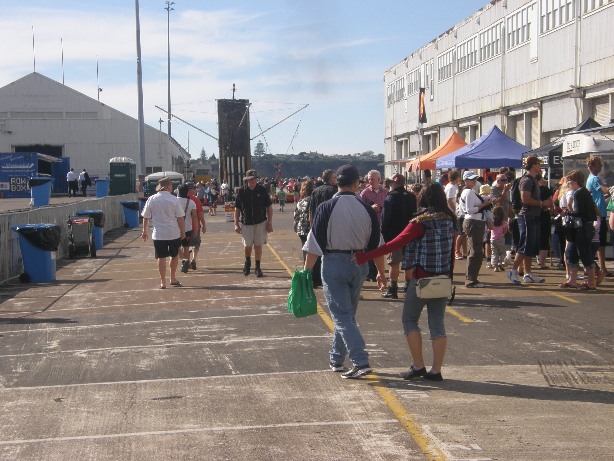 Despite little advertising the wharf was thronging with people. Where did they all come from? Hard to say. Just came down town after Anzac Day looking for something to do, and saw there was something up at Queens Wharf Party Central and headed on down. Despite little advertising the wharf was thronging with people. Where did they all come from? Hard to say. Just came down town after Anzac Day looking for something to do, and saw there was something up at Queens Wharf Party Central and headed on down. |
 Vintage vehicles, games, bouncy castles, take away food, the odd portaloo. Shade was hard to find though. In all that sun... Vintage vehicles, games, bouncy castles, take away food, the odd portaloo. Shade was hard to find though. In all that sun... |
 And the Ports had laid on their party special. Everyone came down to the end of the wharf to look... And the Ports had laid on their party special. Everyone came down to the end of the wharf to look... |
 Yep. Dancing tugboats. Something for everybody. Yep. Dancing tugboats. Something for everybody. |
 They came on their bikes, disability buggies, wheel chairs, skate boards, and they came in their hundreds taking photos and enjoying being somewhere they'd never been allowed before... They came on their bikes, disability buggies, wheel chairs, skate boards, and they came in their hundreds taking photos and enjoying being somewhere they'd never been allowed before... |
 And they came to have a look inside those sheds. Both sheds were open to view. Pity nobody could look in the upper floor of Shed 10 - but it's not that safe at the moment... And they came to have a look inside those sheds. Both sheds were open to view. Pity nobody could look in the upper floor of Shed 10 - but it's not that safe at the moment... |
 Many people took the opportunity to have a good look around. See what they could see. Not everybody can see the potential. That's par for the course. It's only after some love, design and attention to detail that the sheds will be able to come into their own... Many people took the opportunity to have a good look around. See what they could see. Not everybody can see the potential. That's par for the course. It's only after some love, design and attention to detail that the sheds will be able to come into their own... |
 The temporary ceiling is there, now, with strip lighting - fairly institutional - for when Shed 10 is used as cruise ship terminal which happens at the moment when Princes Wharf has a cruise ship. The temporary ceiling is there, now, with strip lighting - fairly institutional - for when Shed 10 is used as cruise ship terminal which happens at the moment when Princes Wharf has a cruise ship. |
SOS Queens Wharf Save Our Sheds |
Sign their petition at: http://www.sosqueenswharf.co.nz/ Go to Facebook, and check out their page: SOS Queens Wharf |
 The big attraction on the day was undoubtedly the Navy. Their ship attracted huge amounts of attention. Everybody wanted to be shown around. The big attraction on the day was undoubtedly the Navy. Their ship attracted huge amounts of attention. Everybody wanted to be shown around. |
 It got tiring in the sun. There are quite a few old timbers around to sit on, and the sheds were great shelter from the sun. It got tiring in the sun. There are quite a few old timbers around to sit on, and the sheds were great shelter from the sun. |
 These big timbers make great seats. And they all seem to be in the right place. These big timbers make great seats. And they all seem to be in the right place. |
 As I sailed back to Devonport in the ferry, it was great to look back and see people on the peoples' wharf. Walking around the sheds. Enjoying their newest Regional Park. It was a great step of ARC and Government to buy this wharf and everything upon it. As I sailed back to Devonport in the ferry, it was great to look back and see people on the peoples' wharf. Walking around the sheds. Enjoying their newest Regional Park. It was a great step of ARC and Government to buy this wharf and everything upon it. |
We need to think hard before doing anything permanent that will detract from the promise and the potential of the "peoples' wharf".... |


Wednesday, February 24, 2010
Vos Building - Maritime Heritage at Wynyard Quarter
This blog is about heritage buildings, and the marine heritage industry at Wynyard Quarter down on Auckland's waterfront. It is about the need to take an integrated approach to Heritage Planning on that part of Auckland's waterfront. This blog tries to argue in support of the huge value to the Auckland economy of its waterfront maritime heritage and its visitor potential.
It also notes that unless Auckland's public authorities grab this opportunity, then there is a risk that the drive for new development will steamroll over this potential, and the possibility of truly worldclass mixed use waterfront regeneration project will be lost.
The blog ends with a few images from the Roskilde Waterfront development in Denmark. This exemplar is there for Auckland to learn from. I'm sure there are others.
It also notes that unless Auckland's public authorities grab this opportunity, then there is a risk that the drive for new development will steamroll over this potential, and the possibility of truly worldclass mixed use waterfront regeneration project will be lost.
The blog ends with a few images from the Roskilde Waterfront development in Denmark. This exemplar is there for Auckland to learn from. I'm sure there are others.
 This is a Google aerial of the Western Reclamation, aka Wynyard Quarter on Auckland's waterfront. This is a Google aerial of the Western Reclamation, aka Wynyard Quarter on Auckland's waterfront.There are many heritage buildings and sites and structures on the land. The yellow ring marks one of them.... |
 Here it is closer. It is the Vos Building and slipway, currently operated under lease by Sanfords. It is located on Hamer Street. Here it is closer. It is the Vos Building and slipway, currently operated under lease by Sanfords. It is located on Hamer Street.The slipways run out into the waters used for access to Westhaven Marina... |
 Here's a group of ARC Councillors there on Tuesday this week for a site visit. As you can see the frontage of the Vos Building today - lined in corrugated iron - does not present a very pre-possessing street frontage. Yet it conceals a number of treasures that a few Aucklanders are aware of, and believe hold a wealth of opportunities for the future... Here's a group of ARC Councillors there on Tuesday this week for a site visit. As you can see the frontage of the Vos Building today - lined in corrugated iron - does not present a very pre-possessing street frontage. Yet it conceals a number of treasures that a few Aucklanders are aware of, and believe hold a wealth of opportunities for the future... |
 Round the back there is plenty of obvious evidence of the bits and pieces of rusty iron-mongery that characterise a long relationship with boats and chandlery... Round the back there is plenty of obvious evidence of the bits and pieces of rusty iron-mongery that characterise a long relationship with boats and chandlery... |
 And it's the slipways that immediately grab your attention. There are two main slipways to the left, and in the foreground is a hard stand. You can see the basalt stonework on the floor of the hardstand in the foreground, and the narrow - and quite special - basalt rivetements that line the main slipways. And it's the slipways that immediately grab your attention. There are two main slipways to the left, and in the foreground is a hard stand. You can see the basalt stonework on the floor of the hardstand in the foreground, and the narrow - and quite special - basalt rivetements that line the main slipways.In the background you can make out the Auckland Harbour Bridge. |
 The two main slipways can each haul out boats up to one hundred tonnes. Sanfords use the site from time to time to service fishing boats. The facility is a little run down today - like many of the heritage opportunities on Wynyard Quarter. The two main slipways can each haul out boats up to one hundred tonnes. Sanfords use the site from time to time to service fishing boats. The facility is a little run down today - like many of the heritage opportunities on Wynyard Quarter.Many of the pictures below were taken inside the building you can see behind the two boat trailers... |
 Where-ever you look there are interesting piles of marine ironworks from the past... Where-ever you look there are interesting piles of marine ironworks from the past... |
 This is the interior of the main wood and boat carpentery workshop on the site... This is the interior of the main wood and boat carpentery workshop on the site...It is very original, and while it is used - I understand from time to time today - it has become more of a storage shed than a very active workshop. |
 The machinery, floor, and furnishings breathe the history of the place... The machinery, floor, and furnishings breathe the history of the place... |
 A great deal of character.... A great deal of character.... |
 If walls could talk... If walls could talk... |
 Here's how the street frontage of the Vos Building looked during World War II, and here's the workforce outside on the occasion of the launch of its most recent creation... Here's how the street frontage of the Vos Building looked during World War II, and here's the workforce outside on the occasion of the launch of its most recent creation... |
 ...an all wood Fairmile motorboat. These are the boats that rolled off the Vos Building slipways then. It's fishing boats today. It could become a major part of the New Zealand classic boat industry, where classic wooden boats are repaired, restored and maintained. And in such a way that it becomes an important tourist and visitor destination. ...an all wood Fairmile motorboat. These are the boats that rolled off the Vos Building slipways then. It's fishing boats today. It could become a major part of the New Zealand classic boat industry, where classic wooden boats are repaired, restored and maintained. And in such a way that it becomes an important tourist and visitor destination. |
 Roskilde, Denmark, shows a way forward. This time around Viking Longboats, and other important vessels from Nordic history... Roskilde, Denmark, shows a way forward. This time around Viking Longboats, and other important vessels from Nordic history... |
 This image is from the walkway that runs through the Roskilde industrial waterfront. You can see a few Viking Longboat replicas tied up closeby. In the background are modern sailing boats and the local fishing fleet... This image is from the walkway that runs through the Roskilde industrial waterfront. You can see a few Viking Longboat replicas tied up closeby. In the background are modern sailing boats and the local fishing fleet... |
 This workshop - part of the tourist circuit - is where all wooden boats are maintained and built... This workshop - part of the tourist circuit - is where all wooden boats are maintained and built... |
We need to think more broadly in Auckland for the Wynyard Quarter - and for the whole of the waterfront - than just the plastic fantastic boat industry. You can see more pictures of Roskilde at: |

Subscribe to:
Posts (Atom)
Showing posts with label history. Show all posts
Showing posts with label history. Show all posts
Friday, March 11, 2011
Fletcher’s/Winstone Aggregates History of Denial
The thing about Environment Court hearings is there’s lots of time to chat. You gather before a hearing day, morning tea, lunchtime. And you get the gossip. It has been an opportunity for me hear Dick Bellamy’s side of the Three Kings Quarry story – which goes back a long way. Over thirty years.
The first story he told me about was dust. When the quarry was fairly shallow, he says he could regularly see from his house a D9 bulldozer sitting on top of a pile of scoria. Not sure what it was doing there. And then scoria would be tipped into a stone crusher and plumes of scoria dust would blow into the air, and with a reasonable wind, it would blow over houses in the neighbourhood. So that was a big issue for the locals. Dr Bellamy tried to do something about it. Winstone’s denied that the dust coating the good painted weatherboard homes of Mt Eden was from its operation.
So Dr bellamy carefull took samples of the dust from the houses, and – presumably late at night – scampered down to the quarry and scraped some scoria dust off the stone crusher – and took the samples into his mates at Auckland University. They tested both samples and confirmed they were from the same source.
And when confronted with this evidence, Winstone’s claimed that because the roads on the vicinity had been re-surfaced (good old chip seal I guess) with scoria from its quarry (it claimed), then the motorists using the roads had caused the dust.
Man oh man.
Then, Dr Bellamy explained, came the de-watering. Residents had hoped that when the quarry got down to the water table, quarrying would stop. But Winstone’s applied to de-water the quarry so it could dig deeper. It wanted to dig down much further and get out more scoria. By now residents had succeeded in preventing Winstones from mining basalt – very hard and tough – needed explosives, caused vibration and ground shaking. Dr Bellamy was among the residents who took Winstone’s to task over this. They were concerned about the effects of subsidence. When land is de-watered, certain geologies will shrink, causing subsidence. He explained to me this was because there are old river valleys underneath Auckland’s recent volcanic rocks. These are sedimentary and prone to shrink when de-watered. However it appears that Winstone’s again denied such things would happen. Would never happen.
But there has been subsidence Dr Bellamy confirmed. Not a lot, but it has occurred, in contradiction to Winstone’s firm view. Presumably supported by it experts.
So now we have another denial. This denial is that the contaminants from permitted contaminated fill, will not get into the groundwaters, and will not get into Auckland’s aquifers.
Man oh man.
The first story he told me about was dust. When the quarry was fairly shallow, he says he could regularly see from his house a D9 bulldozer sitting on top of a pile of scoria. Not sure what it was doing there. And then scoria would be tipped into a stone crusher and plumes of scoria dust would blow into the air, and with a reasonable wind, it would blow over houses in the neighbourhood. So that was a big issue for the locals. Dr Bellamy tried to do something about it. Winstone’s denied that the dust coating the good painted weatherboard homes of Mt Eden was from its operation.
So Dr bellamy carefull took samples of the dust from the houses, and – presumably late at night – scampered down to the quarry and scraped some scoria dust off the stone crusher – and took the samples into his mates at Auckland University. They tested both samples and confirmed they were from the same source.
And when confronted with this evidence, Winstone’s claimed that because the roads on the vicinity had been re-surfaced (good old chip seal I guess) with scoria from its quarry (it claimed), then the motorists using the roads had caused the dust.
Man oh man.
Then, Dr Bellamy explained, came the de-watering. Residents had hoped that when the quarry got down to the water table, quarrying would stop. But Winstone’s applied to de-water the quarry so it could dig deeper. It wanted to dig down much further and get out more scoria. By now residents had succeeded in preventing Winstones from mining basalt – very hard and tough – needed explosives, caused vibration and ground shaking. Dr Bellamy was among the residents who took Winstone’s to task over this. They were concerned about the effects of subsidence. When land is de-watered, certain geologies will shrink, causing subsidence. He explained to me this was because there are old river valleys underneath Auckland’s recent volcanic rocks. These are sedimentary and prone to shrink when de-watered. However it appears that Winstone’s again denied such things would happen. Would never happen.
But there has been subsidence Dr Bellamy confirmed. Not a lot, but it has occurred, in contradiction to Winstone’s firm view. Presumably supported by it experts.
So now we have another denial. This denial is that the contaminants from permitted contaminated fill, will not get into the groundwaters, and will not get into Auckland’s aquifers.
Man oh man.
Sunday, April 25, 2010
Queens Wharf Opens on Anzac Day
| What fantastic weather there was for the public opening of Queens Wharf as a "Peoples' Wharf" by ARC Chairman Mike Lee and Minister of Rugby World Cup Murray McCully. |
| Despite little advertising the wharf was thronging with people. Where did they all come from? Hard to say. Just came down town after Anzac Day looking for something to do, and saw there was something up at Queens Wharf Party Central and headed on down. |
| Vintage vehicles, games, bouncy castles, take away food, the odd portaloo. Shade was hard to find though. In all that sun... |
| And the Ports had laid on their party special. Everyone came down to the end of the wharf to look... |
| Yep. Dancing tugboats. Something for everybody. |
| They came on their bikes, disability buggies, wheel chairs, skate boards, and they came in their hundreds taking photos and enjoying being somewhere they'd never been allowed before... |
| And they came to have a look inside those sheds. Both sheds were open to view. Pity nobody could look in the upper floor of Shed 10 - but it's not that safe at the moment... |
| Many people took the opportunity to have a good look around. See what they could see. Not everybody can see the potential. That's par for the course. It's only after some love, design and attention to detail that the sheds will be able to come into their own... |
| The temporary ceiling is there, now, with strip lighting - fairly institutional - for when Shed 10 is used as cruise ship terminal which happens at the moment when Princes Wharf has a cruise ship. |
SOS Queens Wharf Save Our Sheds |
Sign their petition at: http://www.sosqueenswharf.co.nz/ Go to Facebook, and check out their page: SOS Queens Wharf |
| The big attraction on the day was undoubtedly the Navy. Their ship attracted huge amounts of attention. Everybody wanted to be shown around. |
| It got tiring in the sun. There are quite a few old timbers around to sit on, and the sheds were great shelter from the sun. |
| These big timbers make great seats. And they all seem to be in the right place. |
| As I sailed back to Devonport in the ferry, it was great to look back and see people on the peoples' wharf. Walking around the sheds. Enjoying their newest Regional Park. It was a great step of ARC and Government to buy this wharf and everything upon it. |
We need to think hard before doing anything permanent that will detract from the promise and the potential of the "peoples' wharf".... |
Wednesday, February 24, 2010
Vos Building - Maritime Heritage at Wynyard Quarter
This blog is about heritage buildings, and the marine heritage industry at Wynyard Quarter down on Auckland's waterfront. It is about the need to take an integrated approach to Heritage Planning on that part of Auckland's waterfront. This blog tries to argue in support of the huge value to the Auckland economy of its waterfront maritime heritage and its visitor potential.
It also notes that unless Auckland's public authorities grab this opportunity, then there is a risk that the drive for new development will steamroll over this potential, and the possibility of truly worldclass mixed use waterfront regeneration project will be lost.
The blog ends with a few images from the Roskilde Waterfront development in Denmark. This exemplar is there for Auckland to learn from. I'm sure there are others.
It also notes that unless Auckland's public authorities grab this opportunity, then there is a risk that the drive for new development will steamroll over this potential, and the possibility of truly worldclass mixed use waterfront regeneration project will be lost.
The blog ends with a few images from the Roskilde Waterfront development in Denmark. This exemplar is there for Auckland to learn from. I'm sure there are others.
| This is a Google aerial of the Western Reclamation, aka Wynyard Quarter on Auckland's waterfront. There are many heritage buildings and sites and structures on the land. The yellow ring marks one of them.... |
| Here it is closer. It is the Vos Building and slipway, currently operated under lease by Sanfords. It is located on Hamer Street. The slipways run out into the waters used for access to Westhaven Marina... |
| Here's a group of ARC Councillors there on Tuesday this week for a site visit. As you can see the frontage of the Vos Building today - lined in corrugated iron - does not present a very pre-possessing street frontage. Yet it conceals a number of treasures that a few Aucklanders are aware of, and believe hold a wealth of opportunities for the future... |
| Round the back there is plenty of obvious evidence of the bits and pieces of rusty iron-mongery that characterise a long relationship with boats and chandlery... |
| And it's the slipways that immediately grab your attention. There are two main slipways to the left, and in the foreground is a hard stand. You can see the basalt stonework on the floor of the hardstand in the foreground, and the narrow - and quite special - basalt rivetements that line the main slipways. In the background you can make out the Auckland Harbour Bridge. |
| The two main slipways can each haul out boats up to one hundred tonnes. Sanfords use the site from time to time to service fishing boats. The facility is a little run down today - like many of the heritage opportunities on Wynyard Quarter. Many of the pictures below were taken inside the building you can see behind the two boat trailers... |
| Where-ever you look there are interesting piles of marine ironworks from the past... |
| This is the interior of the main wood and boat carpentery workshop on the site... It is very original, and while it is used - I understand from time to time today - it has become more of a storage shed than a very active workshop. |
| The machinery, floor, and furnishings breathe the history of the place... |
| A great deal of character.... |
| If walls could talk... |
| Here's how the street frontage of the Vos Building looked during World War II, and here's the workforce outside on the occasion of the launch of its most recent creation... |
| ...an all wood Fairmile motorboat. These are the boats that rolled off the Vos Building slipways then. It's fishing boats today. It could become a major part of the New Zealand classic boat industry, where classic wooden boats are repaired, restored and maintained. And in such a way that it becomes an important tourist and visitor destination. |
| Roskilde, Denmark, shows a way forward. This time around Viking Longboats, and other important vessels from Nordic history... |
| This image is from the walkway that runs through the Roskilde industrial waterfront. You can see a few Viking Longboat replicas tied up closeby. In the background are modern sailing boats and the local fishing fleet... |
| This workshop - part of the tourist circuit - is where all wooden boats are maintained and built... |
We need to think more broadly in Auckland for the Wynyard Quarter - and for the whole of the waterfront - than just the plastic fantastic boat industry. You can see more pictures of Roskilde at: |
Subscribe to:
Posts (Atom)