Showing posts with label cruise ship terminal. Show all posts

Sunday, March 11, 2012

Show Respect for Shed 10

This is a great picture of Shed 10 on Queens Wharf. Despite agreeing to a review of the Port Expansion plans, Mayor Len Brown remains committed to a long term primary cruise ship terminal development on Queens Wharf incorporating Shed 10 into his plans.

He seems unconcerned that this is now a Historic Place. Queens Wharf is a Category 1 Historic Place now. This includes Queens Wharf as well as Shed 10. This place was registered as a historic place by the Auckland Historic Places Trust (HPT) on 10-Dec-2010.

Just because it's a historic place does not mean Shed 10 can't be adaptively reused for an appropriate purpose. That's true. But already I see ugly and damaging changes to the wharf and to the setting of Shed 10, as Len Brown's vision becomes more and more concrete. Unsightly fences are already there. If they are any indication of Len Brown's heritage sensitivity, I shudder to think about what's coming.

You might be thinking, "Joel, let it go. You've got a Port Expansion plan review. That's enough...."

Wrong. Auckland was promised an integrated waterfront plan. The key word there is "integrated". Auckland will suffer from a disintegrated waterfront plan. It is no good if we have a review of the Port plans - that gets done next year - and while we wait Queens Wharf gets taken over by cruise ships for ever. That is the risk. That is what Len Brown seems to be set on. That is why people like me wanted and expected an integrated waterfront masterplan - one which integrated the needs of cruise ships and container ships and considered how this heavy traffic could be dealt with by the port - leaving Queens Wharf as a historic place untroubled and undamaged by long term intervention.

The HPT heritage register says this about Queens Wharf and Shed 10:
Queens Wharf was constructed in 1907-13 as the centrepiece of a redevelopment by the Auckland Harbour Board (AHB) to improve Auckland's port facilities. At the forefront of innovative technology, it was among the earliest concrete wharves in New Zealand and contributed strongly to the development of Auckland's economy. Designed primarily for loading and unloading large overseas vessels, the wharf has also been an important place of embarkation and arrival for passengers and is associated with significant events in New Zealand's history including the 1913 Watersider's strike, the influenza pandemic of 1918 and the country's involvement in two World Wars. It is now the best-preserved of the early twentieth-century finger wharves along the Auckland waterfront, visibly retaining structures and features - including a notable double-storey shed - linked with its early use.

The wharf was erected in Commercial Bay, which was used by Maori for food gathering and other purposes before European arrival. Following the foundation of colonial Auckland in 1840, reclamation of the bay successively occurred. By the early 1860s, a large timber wharf had been erected to service the town's growing commercial centre. A timber wharf survived until the early 1900s, when the inadequate nature of Auckland's harbour facilities caused the AHB to instigate improvements.

In 1903, the AHB employed W.H. Hamer, who was previously Resident Engineer at the Royal Albert Docks in London. Hamer produced a plan for the comprehensive improvement of Auckland's waterfront incorporating a series of finger wharves. The Ferro-Concrete Company of Australasia, was contracted to erect the first of these in reinforced concrete at the Railway (later Kings) Wharf, and by early 1907 had begun building the new Queens Wharf. The company is reported to have been the first to use the Hennebique method of concrete construction in New Zealand, and simultaneously constructed Auckland's Grafton Bridge (1907-10) which had the world's largest single reinforced concrete span when built. From 1909 work at Queens Wharf was carried out by the AHB evidently under Hamer's supervision, and was completed in 1913.

Hamer's design for the wharf encompassed a central roadway; flanking sheds for the storage of cargo; and railway lines on the opposite side of the sheds beside each quayside. The tracks were connected to the North Island Main Trunk Line via the Auckland Goods Station, enabling direct access between the wharf and Auckland's extensive rural hinterland. Cargo sheds were of steel-frame construction with corrugated iron cladding, and were initially envisaged to all be double-storey to accommodate transit facilities on the ground floor and warehousing upstairs. The first of these (Shed 'G', later known as Shed 15, then Shed 10) was erected on the east side of the wharf in 1910. Single-storey steel-framed structures were built on the west side, including Shed 'J' (later known as Shed 18, then Shed 11) in 1914. A Police and Customs Building was constructed near the south end of the wharf in 1911-12.

Before the wharf was fully finished it was used for berthing the HMS New Zealand - a gift from the New Zealand government to the Royal Navy - which was visited by some 94,000 Aucklanders. Towards the end of 1913, the wharf was occupied and barricaded by special constables during the Waterfront strike. The opening of the Panama Canal in 1914 resulted in Auckland becoming the first point of call in New Zealand for ships from Europe and the eastern USA, leading to a further growth in activity. By 1920, Auckland had become the busiest port in New Zealand.

Throughout this period and during the following decades, the wharf remained a central part of the waterfront, housing the Wharf Police and Customs Offices, as well as providing regular ferry services to the North Shore from berths in its southwest corner. It was a venue for ceremonial events, including the departure of troops for the First World War (1914-18), and British royal visits. In 1918, it was linked with controversy over the introduction of the influenza pandemic to New Zealand, which ultimately claimed over 8,000 lives and has been regarded as the country's worst public health disaster. Many believed that the RMS Niagara was responsible for introducing the virus after it discharged passengers at Queens Wharf without quarantine, although this is no longer considered to be the case.

During the Second World War (1939-45) the wharf operated at full capacity to assist the allied war effort, and was part of the infrastructure that supported the military campaign in the Pacific. At this time, the port was considered to be of 'vital national importance.' Facilities were later affected by the 1951 Waterfront Workers Strike, one of New Zealand's longest and most costly industrial disputes.

Some changes to the wharf occurred in 1951, but it was with the advent of containerised transport that the biggest alterations occurred. The former Police and Customs building was demolished. Some of the sheds were destroyed or removed. In 2004, a new ferry terminal was built in the southwest part of the wharf, incorporating an early ferry shelter. In 2009, the main part of the wharf was purchased by the government and the Auckland Regional Council. Following a public debate about the fate of two remaining sheds, one (Shed 'J', or Shed 11) was dismantled and removed in November 2010, and the other (Shed 'G', or Shed 10) retained for ongoing use.
I am not alone in regretting that one of the legacies left Auckland by the Rugby World Cup is Murray McCully's Cloud. The construction and planning of this was rushed through under the Rugby World Cup Empowering Act. Resource Management Act (RMA) niceties were ignored because of Party Central demands. Fair enough I guess - we needed to have that party and do it well. But now it sits there. Empty - apart from events at the end with the view. But these could be provided for without the rest of the cloud.

Wynyard Quarter is praised by contrast. The good planning that led to these outcomes was under the RMA and included a set of Plan Changes and a suite of resource consent applications.

Due process for Queens Wharf under Len Brown's regime appears to be a process which subverts or avoids the RMA. No public process. No notified resource consent applications. Ask the best urban designers and architects to shoehorn something into Shed 10 that doesn't trigger the need for a resource consent. Let's see what we can get away with down there - at the edge of the law - get the best legal advice - because Len must have his cruise ship terminal. What is it about Cruise Ship terminals?

A few wines at Cunard's table seems to be all that is needed.

Come on Len. Be fair. Due process and all that. Do something temporary on Queens Wharf. You wouldn't want to pre-empt the findings of your Port Plans review would you.

Friday, February 24, 2012

Auckland Waterfront Lacks Leadership

Went to the Auckland Waterfront Forum yesterday. Four presentations: Feedback from Waterfront Development Agency "Masterplan" consultation; Wynyard Quarter Public Space Project; Queens Wharf Development; and Westhaven. Very interesting. Then questions. Major concerns emerged from the floor. Not well handled from the front. Hence this open letter....

Dear Bob,

You're not going to like this letter but you like robust feedback. One of the things I liked about the way you got the meeting going was when you spoke directly to Alex Swney and told him you respected what he was doing with 'Heart of the City'. You reflected and said, "we don't care enough about enough in this city..."

And I liked the breakfast. Man that Bircher Muesli was the best I've had in ages. And great idea to serve it in those fancy cocktail glasses. Must've cost an arm and a leg though. Thought we were on a budget....

Enjoyed Brenna's feedback presentation. I can imagine how much effort went into smoothing out the wrinkles. You clearly liked the fact that 83% of the feedback was positive. Well. The public like what they see on Wynyard - and most were duped by the glossy images in the coffee table publication you put out. A few of us understood enough, saw behind the pictures enough, and cared enough, to put in submissions of concern about the 1989 Port-Expansion plans that were buried in there and the hasty Cruise-on-Queens plans. These concerns did get a mention from Brenna.

What also got a mention was the Peer Review you had done by Arup Australia of your Waterfront Development Plan consultation process. This has to be a must-read. I saw there in the fine print of Brenna's presentation on screen that you guys got a 'tick' for heritage and stuff, but you got a 'cross' for environment and leadership. That must've come as a bit of a shock to the Board.

After Brenna we had Henry Crother's excellent work on Wynyard's public spaces. And then Queens Wharf by staff member John Smith who I remember well from my time at Auckland Regional Council. Then Westhaven. And then questions. And statements.

It was pretty much sitting room only in the Floating Pavillion which had gently rocked us all throughout. Not to the point the Bircher Muesli was threatened, but a few of us were a bit seasick.

Jasmax Principal, Richard Harris made the ballsiest statement. It was ballsy because Jasmax have been retained to do the Queens Wharf Shed 10 Cruise Ship Terminal design. You hardly every hear from contractors, or would-be contractors, in an environment like that. Don't bite the hand that feeds you. But these are the guys who know their onions. And they care. But there is a sort of misplaced code of ethics that shuts most of them up - just when you really need to hear from them. So we heard you Richard. Richard said loud and clear that the Waterfront Masterplan was not an Integrated Plan - because it had not properly considered the Port Expansion plans. His was a leadership statement.

I hope you heard what Richard said, Bob. Really heard. Because if you didn't you're in the wrong job.

Greg McKeown also asked you a question, Bob. But you didn't really answer it. Greg started by saying he was heartened by your sympathetic words recognising public concerns about the Port plans, but that he couldn't quite reconcile those words with the technical papers and policy positions on your website. I don't think you heard what Greg was saying. He is always polite. Or maybe you decided to smile and move on. But you're not a man averse to a down-trou, so I'll say it plain. You're being two-faced about the Port, Bob. Is that your Board's position too?

There is that big Arup 'X' against your leadership....

To be fair, Bob, you did describe the Port as 'the elephant in the room...'

But the Port isn't the only elephant.

In Brenna's presentation the Waterfront Forum was advised that Queens Wharf Cruise Ship terminal Resource Consents would be 'granted in July 2012'. I used my question to ask John Smith what consents were being applied for, what the process would be, and whether the applications would be notified.

John told the meeting that discussions were occurring with Council staff, and that he would get back to me when he had more information.

I have to tell you Bob, that I was somewhat disappointed to hear this. You praise the planning work that delivered what we see at Wynyard. You probably know that Auckland City Council and Auckland Regional Council sweated blood over the plan changes and resource consent applications and public hearings that hammered out the planning framework for what we see today. So John's answer to my question should concern you and your Board. It's shonky.

Bit like that stormwater pipe in Glen Eden. Shonky.

You guys are planning a major change in the use of Queens Wharf (Cruise Ship Terminal), with a whole pile of different environmental effects (traffic on Quay Street, passengers in buses and taxis, conflicts with public access - all different from before), without going through due process.

Would you allow a private developer to do what you plan to do with Queens Wharf without a decent set of resource consents and conditions?

Auckland Council is the other elephant that was in the room yesterday. The biggest elephant in fact.

Show your board and Auckland some leadership Bob. Then we'll give you a 'TICK'.

Wednesday, December 21, 2011

Public Interest and Queens Wharf

Just wanted to show what Auckland Council is allowing, incrementally, on Queens Wharf. Right now. I took this picture from the end of Queens Wharf looking out to the Harbour entrance. You can see Mt Victoria and North Head to the left. A signature view from Auckland's public waterfront.

I took the picture about a year ago.
This image is from a blog I posted a couple of months ago, showing how that view would change, if Ports of Auckland expansion plans went ahead.
This photo-shopped image shows how that view could change after the reclamation. In fact it is likely to be even worse because Ports want to stack containers high on their newly reclaimed land to cope with an almost quadrupling of container volumes. 
But sadly, that view has already changed. I took this photo today. This incredibly ugly and threatening fence has gone up. A sign of things to come on Queens Wharf. Which is already turning into a taxi rank and car park for all and sundry.

I appreciate there are gates in this fence which are usually open when there is not a cruise ship there. But the fence is a hundred metres long. Ugly and threatening.
This fence is presumably needed when a cruise ship visits. A far cry from the striking red fence that kept the public away from the port in days gone by. There are so many other more creative ways to temporarily protect the cruise ship industry from the attention of Auckland's public. Given that the majority of days the whole wharf is available to the public, surely it is in the public interest NOT to have a permanent fence like this.

One leader described Queens Wharf as Auckland's next Regional Park. Do we really need permanent fences like this in public places? 

Tuesday, September 6, 2011

Auckland Waterfront Plan Conflict

Transformational Move 8 -
Revitalising the Waterfront -
Water City...

This is the heading for the part of the Auckland CBD MasterPlan draft (voted on by Auckland Council at its Future Vision Ctte meeying on August 31st) that deals with the waterfront.

Interesting that this is given advance airing on this agenda. Before the Waterfront Development Agency has said much publicly. Or released its own draft plan. A sign perhaps that Auckland Council is tightening its control of its CCOs. Apart from Watercare.... Not necessarily a sign of conflict. But certainly a sign of control...

I have looked through the various documents to discern the Council's logic and vision for Queens Wharf. And this is what I have found out so far, in the proposed plans, which are being put out for public consultation later this month:

That Queens Wharf is to become part of what is termed the "cruise hub" terminal for New Zealand for the "next 15 years".... This will require "the redevelopment of Shed 10, supported by the Cloud structure together with a secondary terminal at Princes Wharf". Apparently this: "cruise terminal project (2012-2018) will deliver a world-class, multi-cruise terminal on Queens Wharf..."
Comment: The fine print here suggests that the Cloud will stay for 15 years. The fine print also indicates it is planned that the Queens Wharf cruise terminal is planned for at least 2 cruise ships at a time (multi-ship). While the words "cruise hub" don't say "hubbing terminal", that is the clear inference.

Both of these plans seriously threaten the public use of, and access to, Queens Wharf. I find them completely out of place on a people's waterfront.

The numbers used to support this use of Queens Wharf are hard to find. But one is quoted in the report to councillors. It states: "each year 2.5 million visitors arrive in Auckland by air or cruise ship...the challenge is to make them stay longer...".
Comment: We know Auckland is a tourist gateway. And it's good to retain the tourism dollar in Auckland. But Auckland is also home to 1.5 million locals. And it would be good to retain some of their visitor dollars in Auckland also - and one way to do that - as we are belatedly discovering at Wynyard Quarter - is provide high quality, full of activities, waterfront public spaces and places.

But if you really believed Auckland's economic salvation from the visitor economy was tourists, and if you get really picky, even naive, you might think it's better to drop those unsuspecting tourists as close to Queens Street as you can get them. Queens Wharf is closer than Auckland International Airport after all. But how many passengers are we talking about here, and how much do they spend while they are here - compared to Auckland's 1.5 million residents for example?

If you take a guess, and estimate 60 cruise ship visits with 1000 passengers each, and they seem to stay for 36 hours on average, that boils down to 90,000 visitor days a year. From cruise ship visits. And that's why the Council's quoted figure of "2.5 million" cruise ship and jet plane visitors each year is so misleading. Why? Well let me explain. For example, according to ShareChat's website on the performance of Auckland International airport, "Overall inbound tourism for the twelve months ended February 28 was up 2.5% to 2.5 million". Doesn't leave much room for cruise ship visitors does it? You can see from those two figures that the proportion of visitors coming by cruise ship is tiny - infinitesimal in fact. So this hardly justifies sacrificing a second central city wharf to their activities.

All Auckland would be doing would be providing free-parking for Carnival Australia CEO Ann Sherry's cruise ships. At great cost to Aucklanders.

And then there are the various visions and goals and outcomes in the CBD Masterplan. It appears that the Waterfront Development Agency have set four goals in its statement of intent, which it appears is being put out for consultation, but buried in the detail of Auckland Council's CBD Master Plan. The WDA wants this:

* A public waterfront: A place for all Aucklanders and visitors to Auckland, a destination that is recognised for its outstanding design and architecture, natural environmental quality, public spaces, facilities and events; a place where we can express our cultural heritage and history, and celebrate our great achievements as a city and nation.
* A working waterfront: a place for marine industries and businesses, local and international port activities; an attractor of further high value business investment and activity, the location that supports authentic and gritty waterfront activities that must locate here.
* A growing waterfront: The critical location of sustainable urban transformation and renewal in Auckland, where we must demonstrate international best practice and innovation; achieve a significant lift in Auckland’s and NZ’s productivity; the most liveable of New Zealand’s central city urban communities; a vibrant mix of residents, business and employees, visitors, and activities.
* A connected waterfront: A place where people are highly connected locally and with the inner city, to the rest of Auckland and New Zealand; that is highly accessible and safe for pedestrians, cyclists, and passengers, with telecommunications that support connectivity.

Comment: I quite liked these. Well. Apart from the "A growing waterfront" one. Strange words. Calls to mind a doubling of POAL reclamation. You know. Heaps more containers. It's about growth. rather than development. So not really good for the "S" word. The sustainability word. But I love the top one. That's about a public waterfront first (for all Aucklanders and visitors to Auckland - fantastic - love those words), and a working waterfront second.

But what's really interesting is that Auckland Council has taken these goals, and used them to assess its "cruise hub" plan for Queens Wharf. They come to this conclusion:


Man oh man. Auckland Councillors actually voted for this. They seriously believe that a multi-ship hubbing cruise ship terminal on Queens Wharf is going to: "enhance public access to, and enjoyment of, Queens Wharf...", and thereby deliver on the Waterfront Development Agency's vision. Think again guys.

And again. Have you done the cost benefit analysis? Have you really weighed the social costs against the economic benefits (remember the tiny numbers) so that you put your hands up and say, yes, we genuinely believe, that a multi-ship hubbing cruise ship terminal on Queens Wharf: "enhances the waterfront as a visitor and waterfront destination, resulting in economic benefits..."

Because that's what you voted for. You voted to double, maybe even triple, central cruise-ship parking places in the heart of Auckland. Thankfully you are consulting over it. Wonder what the WDA thinks about this?

What is it about cruise ships?

Talk about being taken for a ride.

Friday, August 5, 2011

Council's Relentless Waterfront Sale

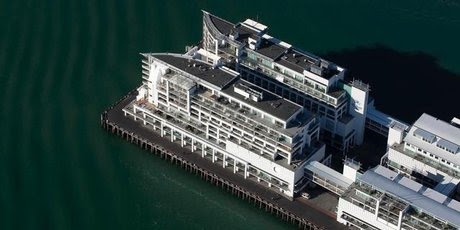
"Where is Auckland Council's Waterfront Masterplan?" is the question I asked nobody in particular as I read NZ Herald's apparently innocuous news item about the sale of the Hilton Hotel on Princes Wharf.


The article ran in Granny Herald within the August 3rd Business section.
".....The five-star boutique Hilton Auckland has been put up for sale in an international campaign but its American operator will continue to run it and the property will stay a Hilton.

Dean Humphries, Jones Lang LaSalle Hotels' executive vice-president, who was appointed to sell the property exclusively said Hilton Hotels would manage it for the new owner as part of its operations here, which also include Hiltons at Taupo and Queenstown.

Brian Fitzgerald, an investor, said the property belonged to a number of parties including Willeston Capital.

"It's a great time to sell, never better. You won't sell just because of Rugby World Cup but it's performing well," Fitzgerald said.

Auckland Council records shows the Hilton, at 141 Quay St, was valued at $44.6 million in July 2008.

Its top floor is the quarter-acre apartment of bankrupt property developer David Henderson, whose Kitchener Group developed all six buildings on the wharf, creating bars, restaurants, covered carparking, apartments, offices and the hotel. Henderson still lives in the apartment, despite attempts to sell it for about $10 million.

All the wharf properties are on terminating leases, set to run for another 84 years, so that after then the buildings have no legal right to occupy the wharf space.

Hilton's restaurant White has been shut for some time as it undergoes a refurbishment and is expected to have a new name when it reopens.

Humphries said the ground-floor Overseas Passenger Terminal in the building was part of the sale deal.
That made me sit up. The Overseas Passenger Terminal on Princes Wharf is apparently up for sale along with the Hilton Hotel. Makes sense I suppose. One careful owner since 2001. Lock and stock and barrel up for sale.

The history of how this all got built, and shifted from public ownership and into private control is not a happy history - especially if you believe there needs to be much more in the way of a destination focus for Auckland's 1.4 million people down there. How many councillors understand that even council's own plans for Princes Wharf redevelopment included art galleries, museums, and a cinema.

Have a look at this if you need reminding: How Sad is Princes Wharf?, and How Sad is Princes Wharf - Part II

But I digress. Back to Granny Herald's story:
Humphries said the ground-floor Overseas Passenger Terminal in the building was part of the sale deal.

"This also acts as a conference and exhibition centre for the hotel.
So. Here we have the agent acting on behalf of the owners, talking up the alternative uses of what we know as Auckland's Overseas Passenger Terminal. So. Auckland didn't get a cinema, or a museum, or much else in the way of public waterfront amenity on Princes Wharf. The cruise ship industry has turned its nose up at the facilities it has had access to and use of for close to a decade. And now it's apparently for sale. So where are they going to go? Read further on in the story...

"Auckland Council has indicated that the passenger terminal will move to Queens Wharf in the 2012-13 cruise ship season, which will therefore allow the hotel to utilise this space more efficiently during future cruise ship seasons."

Man oh man. So that's the deal. Without even a whiff of a Waterfront Masterplan, Auckland Council has indicated that the passenger terminal will move to Queens Wharf.

So. Auckland's relentless and destructive policy of privatising waterfront amenity is still alive and well under King Len and his happy Councillors. And I thought the whole reason for having a Waterfront Development Agency was to take an integrated look at Auckland's whole waterfront.

This piecemeal sale of Princes Wharf is an injury by itself, but if that sale also inevitably leads to the sale of much of Queens Wharf's amenity to the cruise ship industry, then it will be an insult to Auckland.

Tuesday, June 15, 2010

Pacific Sun Uses Queens Wharf


There I was on Monday morning, 14th June, minding my own business commuting to work at the ARC by ferry from Devonport. And I said, "ullo, ullo, ullo?" There was the Pacific Sun tied up at Queens Wharf, and Princes Wharf was empty. So I went to have a look from the ferry terminal.

The place was teeming with people and security guards. Could I get onto Queens Wharf?...

I couldn't quite tell what was happening from the Red Gates. Were people coming or going? What was going on? I tried to look like a tourist as I pushed my bike onto the wharf. The guards ignored me...

As I got closer I could see that whole families appeared to be getting off the Pacific Sun, piling into taxis and cars and all sorts, and heading home. Bags and all.

At one point there must've been half a dozen big buses taking up a whole lot of space, coming and going...

And there were private cars for Africa. People piling in with their bags and being sheparded out onto a busy Quay Street by those Security Guards...

At the other end of the ship containers were being loaded and unloaded, trucks were coming and going, and barriers were in place to prevent nosy members of the public from getting too close.

So I asked a Security Guard what was happening and it all became clear. This particular trip for the Pacific Sun was from the Islands somewhere, and it was terminating in Auckland. All the passengers were disembarking he explained, and another trip would be departing later that day, after the new lot of passengers were allowed on board.

The point of this blog is to illustrate the intensity of use of Queens Wharf, and the major traffic effects, when a cruise ship uses the wharf to terminate and originate a cruise.

Most cruise ship visits to Auckland are so-called "Port of Call" visits. The ship simply calls in, the passengers live on board the ship with all their baggage, and they visit Auckland as tourists while the ship is in port. The demands on the cruise ship terminal are much less for "Port of Call" visits than "Originating" or "Terminating" visits. So are the traffic demands.

The Pacific Sun is a medium sized cruise ship, holding a maximum of 1900 passengers. That's quite a few. Other cruise ships that visit Auckland are bigger - with presumably greater traffic and freight demands - should they dock here to terminate or to originate a cruise.

The question of whether Queens Wharf should be used for a cruise ship terminal is critically affected by the further question of what the terminal is for: port of call only? Or to originate and terminate cruises? And there is the additional question of whether it should be Queens Wharf (or Princes Wharf or another wharf) that functions as Auckland's primary cruise ship terminal.

These questions and options have not been properly canvassed with Aucklanders.

It is disingenuous to describe Queens Wharf as "the Peoples Wharf", when it is obvious how damaging to public amenity a "world class" cruise ship terminal designed to service terminating and originating cruises will be.

Wednesday, June 9, 2010

Public Consultation about Queens Wharf

Many people are asking the question: why does Queens Wharf have to be a cruise ship terminal? Many people - and organisations are asking the same question. Some are asking how the decision got made, who made it, and whether there was appropriate consultation.
In an earlier blog I wrote about the sequence of confidential meetings and processes that have occurred, leading up to today. This is at:
http://joelcayford.blogspot.com/2010/05/queens-wharf-chronology-of-confidential.html

But the ARC has to fund what it does, and its annual funding plans must be put out to the public in a very formal way for consultation. There are processes for that and they are defined in the Local Government Act. Major issues are also put out for public consultation before decision.

The outcome of Auckland's major consultation about how the waterfront should be developed, and what wharf should be used for what activity, was called Waterfront Vision 2040. It resulted from a widely distributed consultation document called Linking People, City and Sea, which was used to get feedback from stakeholders and the public. This feedback was used to create Auckland's regional policy for the waterfront, which, to repeat, was called Waterfront Vision 2040.

The table below compares what was written in those two documents about Queens Wharf and about a possible Queens Wharf Cruise Ship terminal:


Waterfront documents

Linking People, City and Sea

Waterfront Vision 2040
Queens Wharf

...no mention...

"Queens Wharf will continue to be used for port operations over the short to medium term, in particular for noncontainer based cargo. However, alternative uses will be explored over the medium to long term when the wharf is no longer required for core port functions. Ideas include providing public access, public spaces, a continual link between Queen Street and the waterfront, reconfiguring the wharf structure to create a new town basin, an iconic building, extending ferries and water taxis, entertainment and a mix of activities."
Cruise ship terminals

...no mention...

Only mentions Princes Wharf cruise ship terminal


The point being that no public comment or suggestion was made in the above consultation process to the effect that anyone, anywhere was thinking Queens Wharf might or could be used as cruise ship terminal. If any interested person picked up a copy of Waterfront Vision 2040 and read it, wanting to learn about cruise ship terminals, they would understand that activity happened on Princes Wharf and was not part of the plan or public policy for Queens Wharf.

This next table illustrates how the Queens Wharf picture changed when the ARC put out its Long Term Council Community Plan 2009/2019 - as required by the Local Government Act. In effect ARC's LTCCP is its annual budget for the coming year, but also contains estimates for the subsequent 9 years. The law requires ARC to publicly notify a draft LTCCP for public comment. This happened sometime in March 2009. ARC then considered the feedback, made changes in line with that feedback, and then adopted the final LTCCP. This would have happened toward the end of June 2009.


ARC LTCCP 2009-2019

Draft LTCCP

Adopted LTCCP
Queens Wharf

...no mention...

Chapter 1/Introduction: This LTCCP includes $20 million for the joint purchase of Queens Wharf with the Government, to ensure it is opened up for public access and developed into a premier cruise ship terminal for New Zealand. The transfer of ownership will take place in the second quarter of 2010, giving time for the wharf to be developed as a public venue for the Rugby World Cup in 2011. The ARC’s contribution to the purchase comes from a drawdown from Auckland Regional Holdings (ARH).
Cruise Ship Terminals

Chapter 1/Introduction: ...no mention...

Chapter 1/Direction: ...In addition, the ARC is working on plans for the provision of improved facilities for cruise ships in Auckland.

Chapter 1: This LTCCP includes $20 million for the joint purchase of Queens Wharf with the Government, to ensure it is opened up for public access and developed into a premier cruise ship terminal for New Zealand.

Chapter 1/Direction: This LTCCP includes a $20 million drawdown from Auckland Regional Holdings (ARH) to fund the joint purchase of Queen’s Wharf, with the Government. Queen’s Wharf will be opened for public access in time for the Rugby World Cup 2011 and developed as an international-standard cruise ship terminal.

Cruise ship terminal funding

...no mention...

Chapter 5/Financial Information:
The LTCCP includes the Council’s decision to purchase, along with the New Zealand Government, Queen’s Wharf from Ports of Auckland Limited, with the intention that Queen’s Wharf be developed for public access and also as of a premier cruise ship terminal for New Zealand. This LTCCP includes the half share of the purchase price of Queen’s Wharf. However, it does not include the costs of developing Queen’s Wharf as it is assumed that these costs will be met by the Government and/ or Auckland City Council. Nor does it assume any revenue from the development, as the exact
nature of those developments has not been decided. It is also assumed that the cost of ongoing maintenance of Queen’s wharf will be fully met by Ports of Auckland Limited and by the cruise ship terminal operator. Therefore
maintenance costs are not included in this LTCCP.


As you can see, the Adopted Plan (LTCCP) is significantly different from the Draft Plan. This is not unusual. The world does not stand still between when a plan is put out for consultation and when it is adopted. It takes three months. And in these three months PM John Key put forward his suggestion that Queens Wharf would make a great party central for the Rugby World Cup. Ports of Auckland needed cash quickly. And the deal was done.

However the explanation in the adopted LTCCP also states that: "Queens Wharf would be developed as a premier cruise ship terminal for New Zealand". This is a sweeping statement that directly contradicts the public policy position that was developed and promulgated in the Waterfront Vision 2040 exercise. Without any public policy change process. There is no opportunity for the public to look at and comment upon the adopted plan. The ARC is entrusted to take account of public feedback on the draft plan, and act on that. But it went much further and decided, unilaterally, that Queens Wharf should be a "premier cruise ship terminal for NZ."

While it is understandeable and appropriate for the adopted LTCCP to provide for the purchase of ARC's share of the wharf, it is not an appropriate vehicle to effectively change public policy, and announce it as a fait accompli. There was no consultation over this change in public policy. There was no opportunity for the public to be consulted over this change of direction. There was no public exercise considering cruise ship terminal options.

This final table (below) shows how the ARC has used this year's Annual Plan process to add another unconsulted decision on top of its unilateral 2009 decision to develop Queens Wharf as a cruise ship terminal. Rubbing salt into the wound.

This year's Annual Plan effectively deals with the final four months of ARC's existence before it is amalgamated with other city councils into the Super City Auckland Council. It covers July to October 2010. It is still referred to as the 2010-2011 Annual Plan. What makes this Annual Plan process different to other years is that ARC can adopt it by resolution following minimal consultation (little more than putting it up on its website) - but ONLY if the Annual Plan is consistent with the LTCCP. You can see below that the Draft Annual Plan was much the same as the adopted LTCCP. It was reasonably consistent with it.

But the Adopted Annual Plan is not. It contains a new $4,431,000 provision for "Wharves". I asked about it at a Council meeting, and was advised by the CEO that "it was for maintenance". However the Financial Statements explicitly state that: "maintenance costs are not included in this LTCCP (sic)", but that the Annual Plan: "does include costs relating to the initial development of the wharf for the Rugby World Cup."

I would not be unhappy for ARC to spend public funds on sprucing up Queens Wharf for Party Central if we'd asked the public about that. But it is downright irresponsible to commit ARC funds for that purpose when Auckland City Council has already properly consulted its ratepayers and allocated budget for the same job!

In this Annual Plan ARC has effectively voted to dismantle (demolish) Queens Wharf's 100 year old cargo sheds. This money, this ARC $4,431,000, is ear-marked to pay for the destruction of waterfront heritage that an increasingly vocal public want protected, re-used and restored.


ARC Annual Plan 2010-2011


Draft Annual Plan 2010-2011

Adopted Annual Plan 2010-2011
Queens Wharf Cruise Ship terminal

Chapter 1/Exec Summary: Last year the ARC, together with the Government, purchased Queens Wharf to open it up for permanent access, and to build a cruise ship terminal for the growing cruise ship industry, and for Rugby World Cup activities.

Chapter 1/Exec Summary: Last year the ARC, together with the Government, purchased Queens Wharf to open it up for permanent access and to build a new cruise ship terminal for Auckland. The ARC and the Government recently announced plans for a temporary structure on Queen's Wharf as part of the 'fan zone' for the Rugby World Cup celebrations. The temporary structure will be able to service two cruise ships during the event. It is intended that the wharf will be further developed after the Rugby World Cup.

Planned Queens Wharf cruise ship terminal related activities

...no mention...

Chapter 2/Built environment: What we want to achieve - progress with the implementation of the Auckland Waterfront Vision 2040.

Wharves $4,431,000

Cruise ship terminal financial information Chapter 3/Financial Information: The draft Annual Plan 2010/11 reflects the Council’s purchase, along with the New Zealand Government, of Queen’s Wharf from Ports of Auckland Limited, with the intention that Queen’s Wharf be developed for public access and also as of a premier cruise ship terminal for New Zealand.

This draft plan does not include the costs of developing Queen’s Wharf.

It is also assumed that the cost of ongoing maintenance of Queen’s wharf will be fully met by Ports of Auckland Limited and by the cruise ship terminal operator. Therefore maintenance costs are not included in this LTCCP...
Chapter 3/Financial Information: The draft Annual Plan 2010/11 reflects the Council’s purchase, along with the New Zealand Government, of Queen’s Wharf from Ports of Auckland Limited, with the intention that Queen’s Wharf be developed for public access and also as of a premier cruise ship terminal for New Zealand.

This draft plan does not include the costs of developing Queen’s Wharf. It does include costs relating to the initial development of the wharf for the Rugby World Cup 2011.

It is assumed that the cost of ongoing maintenance of Queen’s wharf will be fully met by Ports of Auckland Limited and by the cruise ship terminal operator. Therefore maintenance costs are not included in this LTCCP...


The public have not been asked their views about these matters in accordance with the Local Government Act. That is why they are grumpy.

How Queens Wharf is used, and what happens to any heritage part of Queens Wharf, should be dealt with in a proper public process. Not the manipulative and pre-determined jack-up that is exposed by the evidence above.

Tuesday, March 9, 2010

Queens Wharf: ARC and Government JV Meeting on Thursday

A little bit of pre-amble first, to get to the point of this blog....

Auckland Regional Council met yesterday to consider its Draft Annual Plan for the first 4 months of the 2010-2011 year. It's only 4 months, because that's all the time left to ARC (from end of June) to abolition at the end of October 2010.

The public meeting of ARC's full Council considered the ARC's activities, and provided budget and activity reviews for each ARC department. In particular, the activities listed for the ARC's Transport and urban Development Department to 31 october 2010 included the item:

In terms of Queens Wharf, work will progress on the agreed option for the redevelopment of wharf for the Rugby World Cup.

One councillor (not me) queried this item. In fact I was curious as to what "the agreed option" was, and who had agreed it.

The CEO (Peter Winder) gave a one sentence response, and then stated to the effect: "... there will be a meeting of the Unincorporated Joint Venture this Thursday, between Government and ARC, given the alignment between the parties..."

This was an interesting revelation. I was not aware such a JV was in existence.

The ARC has not considered the matter of Queens Wharf, or re-considered its position, since it last considered it at a confidential meeting that was held on the 22nd December 2009, which was attended by just 7 councillors. That meeting was the subject of my last December blog: http://joelcayford.blogspot.com/2009/12/queens-wharf-another-ad-hoc-auckland.html. At that meeting the ARC learned of proposals for a $100 million Cruise Ship terminal, which it voted to support (though I voted against).

In the last few months this project has been opposed by all Auckland's Councils and their Mayors. There have been statements from the Prime Minister and also the Hon Murray McCully (Minister of for Rugby World Cup and supporter of Cruise Ship Terminal).

The ARC's position has not been revisited in the light of these events.

Later in yesterday's ARC Council meeting I asked two further questions about Queens Wharf: "What is the agenda for the Thursday meeting? and "When will the item be reported back?"

The CEO responded. He stated that the Queens Wharf JV meeting would be conducted: "within the framework agreed at the December 22nd meeting" and that "the numbers will be within that...". He also noted that the item would be reported back after that meeting, and that it would be either to a meeting of full Council or of the Transport & Urban Development Committee.

The mention of "the numbers" rang alarm-bells with me. There has been considerable discussion behind the scenes following the Mayoral Forum meeting which decided against the proposed $100 million Cruise Ship Terminal. The option still exists - in theory at least - of Government and ARC proceeding independently to develop the Cruise Ship Terminal - despite the opposition of all of Auckland's Councils.

This option exists because the ARC and Government co-own Queens Wharf. In addition ARC would be the consent authority because Queens Wharf is a structure over water. Queens Wharf is not on land, so is not subject to the planning jurisdiction of Auckland City Council.

A problem would be the funding. Who would pay for the Cruise Ship Terminal? Government has indicated it was prepared to invest in the Cruise Ship Terminal - but I understand this would be in the form of a loan. This loan would become a charge on the incoming Auckland Council. So ratepayers would still be expected to pay for the Terminal. It would not be a gift.

There are other options. Chairman Mike Lee has made no secret of his desire to demolish the sheds that are on Queens Wharf. I am advised that the Hon Murray McCully shares this scorched wharf enthusiasm. Neither see any value in retaining these character buildings.

I - and many other don't agree with immediate demolition. I think Auckland should have the opportunity of using these buildings - as part of Party Central -and as part of reclaiming and rediscovering how we might use this new public waterfront asset and its amenity.

At the Confidential December 22nd meeting of Council, ARC made a number of key decisions, none of which I am freely able to disclose. However, I choose here to disclose some details, because of the public interest matters this issue raises, and because I don't believe due process is being followed.

In particular, at the Confidential December 22nd meeting of Council, ARC decided that:
In the absence of an agreement by Auckland City Council to progress and finance the development, the Chief Executive investigate an exclusive partnership between the Auckland Regional Council and Government and report back to Council in January 2010.
This motion refers to the development of Queens Wharf including the $100 million Cruise Ship Terminal. Auckland City Council has clearly not supported that project. Now it appears the ARC and Government have set up an Unincorporated Joint Venture. However there was no report to Council in January - as decided in the resolution. Nor one in February. Now we hear informally about a meeting of this JV happening this week. Without the ARC receiving a formal report as agreed. Not good process.

Secondly, at that meeting, the ARC also "endorsed the CEO to negotiate a contribution by the ARC ..... towards the 2009-10 cost of redeveloping Queens Wharf..." I cannot reveal the precise details of the amount voted on (somewhere between $5 million and $10 million), but it seems entirely appropriate to reveal some of the works and their costs that the ARC considered would be part of the Queens Wharf Redevelopment.

ARC estimates in the report circulated for the meeting provide a figure of $1.1 million for: "Site Preparation", including: "demolish sheds, remove redundant services"....

So. Without any reports or further consideration it was assumed that the sheds would be demolished. ARC hasn't actually voted on that issue. But you can see how intriguing this is. The ARC would be the regulatory body considering any application its JV might make to demolish the sheds to make way for anything else - be it Party Central or a Cruise Ship Terminal.

So where are we now?

So far, Auckland's Councils don't support a Cruise Ship Terminal. But Government and ARC - according to its December 22nd decision - both do.

And we have learned there's a meeting of The ARC and Government Queens Wharf JV on Thursday, where ARC's position will not have been clarified and established in advance by the meeting it resolved to have.

Not good process.

Sunday, February 28, 2010

Party Central Will Happen at Queens Wharf

A good ten years ago it was fellow North Shore City Councillor Andrew Eaglen who - when schooling me in the art of being a councillor - advised: "... a good council meeting is one where a bad decision has not been made..."

I breathed a sigh of relief on Friday. A bad decision had not been made. Government has committed to Party Central on Queens Wharf - but no big cruise ship terminal.

It's media release - under the name of the Hon Murray McCully states:

Rugby World Cup Minister Murray McCully says the Government and the Auckland Regional Council are "fully committed to delivering Party Central at Queens Wharf in Auckland for next year’s Rugby World Cup", but have decided to delay the construction of a cruise terminal until after the event....

“While there is clear public support for a cruise terminal it is also clear that the debate has left some with a concern that the proposal might be rushed in order to meet the World Cup timetable next year. For that reason the Government and the ARC have decided to delay the development of a cruise terminal until after the World Cup.

"In the meantime, the Government and the ARC will work in partnership to deliver Party Central on Queens Wharf. We want Aucklanders and the city’s visitors to be able to enjoy a new public entertainment space that was purchased as a legacy asset.

“We will also put in place temporary cruise facilities of a suitable standard to ensure that our reputation does not suffer during the period of intense cruise activity next year....

While the ARC's media release on Friday states:
"The ARC is very pleased to be working in partnership with the Government to deliver party central on Queens Wharf in time for the cup,” ARC Chairman Mike Lee said.

“We are disappointed – due to the negative attitude of some Auckland mayors – that we’ll be unable to develop a permanent cruise ship terminal within the same timeframe. However, we will make sure appropriate facilities are available on the wharf to cope with the cruise ships being used as hotel accommodation during the cup....

“The ARC will throw Queens Wharf open to the public in April. This will remind everyone what a great asset the ARC and the Government have bought for Auckland, and how proud we will all be once Aucklanders can again get close to the harbour and ships,” said Mr Lee.


It has been interesting and frustrating time, as this Auckland story has surged along with a momentum all of its own. ARC's 8th Feb media release is a salutory reminder...:

It’s encouraging to see Auckland mayors supporting moving ahead with a cruise ship terminal on Queens Wharf, ARC Chairman Mike Lee said today.

“The ARC and Government bought Queens Wharf so Auckland and the rest of New Zealand could capitalise on the country’s growing international cruise ship industry.

“We also bought it to open up access to the waterfront so Aucklanders and visitors to the region could make the most of an outstanding venue for events, and as a public place just to relax and enjoy the harbour.

“The ARC has been absolutely consistent about the need for a decent cruise ship terminal on Queens Wharf. This is why we and the Government bought it.

“While earlier designs were disappointing, I am confident the latest design options for Queens Wharf have considerable potential to match this superb location,” said Mr Lee.

“However, as we have stated consistently, we need to look carefully at the cost and ensure what is built provides value for money in the long run.”

Auckland is expecting 60 cruise ship visits this season – including the Queen Mary II – and 71 next season. February is the busiest month. Seven cruise ships will visit Auckland this week – on three of those days two cruise ships will be in at the same time. Last week there were three cruise ships in Auckland at once.

Research done by the ARC, Government and Auckland City Council shows that on average, each cruise ship passenger spends between $200 and $300 in Auckland each day they are here.

Government research shows the cruise ship industry contributed $117 million to GDP during the 2007-2008 season.

“This research shows without question just how important the cruise ship industry is. It would be silly to allow petty politics and political campaigning to delay Auckland having a welcoming, world-class cruise ship terminal that would enable the city and country to take full advantage of growth in the industry and tourist dollars,” said Mr Lee.


It is interesting to note that a number of New Zealand ports are visited regularly by cruise ships as they make their way around our coastline. It's not just Auckland that is thinking about this stuff.

For example, the Dawn Princess and the Sun Princess both promote tours that include Sydney and Melbourne, and which visit, in New Zealand: Fiordland, Dunedin, Christchurch, Wellington, Napier, Gisborne, Tauranga, Auckland, and the Bay of Islands.

Here is how the Cruise Ship program promotes the various New Zealand ports of call in their brochure:

Day 4 Monday February 8, 2010 Fjordland National Park
Today we cruise through some of the most spectacular scenery in New Zealand as we visit Milford, Dusky and Doubtful Sounds. These spectacular fjords will be a highlight of the cruise, with spectacular scenery and fascinating wildlife. The day will be free for you to enjoy the grand views or take part in some of the many activities available aboard Sun Princess.

Day 5 Tuesday February 9, 2010 Dunedin (Port Chalmers)
We arrive in the city of Dunedin this morning. Originally founded by Scottish settlers and known as the “Edinburgh of the South”, it now consists of beautifully preserved buildings overlooking parklands. We will visit the historic Jacobean style Olveston House, containing a treasure trove of art and antiques, as we explore this attractive city.

Day 6 Wednesday February 10, 2010 Christchurch (Akaroa)
Today we call into the village of Akaroa. Originally founded by the French, it is now a delightful town, still retaining the ambience of France. We have a sightseeing tour of Christchurch with its very English feel. It is the largest city on the South Island of New Zealand. The city boasts modern architecture and historic buildings set against beautiful parks, gardens, rivers and beaches. We return to Akaroa where there will be some time at leisure.

Day 7 Thursday February 11, 2010 Wellington
Today we will have a sightseeing tour of the main sights of Wellington including the Houses of Parliament known as “the Beehive”. We visit Mount Victoria, where we have 360 degree views of the city, then travel by cable car to the Botanical Gardens.

Day 8 Friday February 12, 2010 Napier
Today we visit the city of Napier. We will have a city tour, during which our local guide will provide in depth information about Art Deco style architecture of the city. We will see the National Tobacco building and many shops and houses designed in this popular 1930s style. In February 1931, an earthquake registering 7.9 on the Richter scale levelled almost all the buildings of Napier and raised the sea bed by two and a half meters.

Day 9 Saturday February 13, 2010 Tauranga
We arrive in Tauranga this morning. Tauranga has a thriving commercial and business centre and is a very busy port. Dominating the scene is the harbour and Mount Maunganui. We travel to Rotorua, a small city on the shores of Lake Rotorua, where we explore the geothermal activity of geysers, boiling mud pools and steaming craters. We will see a geyser display, where boiling water shoots many metres into the air and the blue and green lakes named for their reflective qualities.

Day 10 Sunday February 14, 2010 Auckland
Auckland is the largest city and commercial centre of New Zealand. Our morning city
tour takes in the main sights of Auckland, including the Harbour Bridge, which spans the beautiful Waitemata Harbour, Mount Eden, where we get a panoramic view of the city, the Auckland Museum and the quaint and stylish shopping area of Parnell. We will board the Sun Princess early afternoon. Be up on deck as we sail out of the gorgeous Auckland harbour at 6.00pm

Day 11 Monday February 15, 2010 Bay of Islands
Today we call into the far north of New Zealand and visit the spectacular Bay of Islands. We have a morning sightseeing tour and we visit Waitangi House, overlooking the Bay of Islands, where on February 6th, 1840, that the Treaty of Waitangi was first signed between Maori and the British Crown. The Treaty House – built for the first British Resident, James Busby and his family is one of New Zealand’s oldest and most visited historic homes. The afternoon is free....


It is interesting to read what how the industry sees each of these "destinations". What is attractive. What is the reason to visit. I hope that one day, Auckland's waterfront will rate a mention as a key attraction. And I emphasise - just having a cruise ship terminal does not a waterfront make.

BTW, I was talking to someone involved in the Christchurch/Lyttleton cruise ship terminal project: should we have a fancy cruise ship terminal - or not. Economic advice for the Port Company - assuming about 60 cruise ship visits annually - was that there was economic justification for the port company to build a $15 million cruise ship terminal. Then, if you added the economic benefit arising from the spending of cruise ship passengers in Christchurch, there was a further economic justification of an additional $10 million investment in a cruise ship terminal. This gives a total of $25 million for a cruise ship terminal - based on their economic evaluation.

And a further BTW. Here's my anecdotal experience of what cruise ship passengers do. One indicator of how they spend their money, is based on the ferry loads who go over to Devonport Wharf, and the Village. I usually get my hair cut on the Devonport Wharf. There's a Navy Haircut establishment there. Also does Blue Rinses (I don't get those. Yet.) When there's a cruise ship in, there's a queue of cruise ship women waiting for a blue rinse. The hairdresser told me the secret: "I do them for $25, but it costs them $50 on the ship...". Hardly spend-thrifts! And apparently the other indicator is the steady procession of cruise ship passengers trudging back and forward along Quay Street going to the Supermarket. Cheap wine or gin maybe? I know these are anecdotal. But these observations hardly support the assertion that cruise ship passengers each "...spend $300 a day..." when they are in Auckland.

Anyway. Friday was a good day. We didn't make a bad decision.

Wednesday, February 10, 2010

Queens Wharf too short for Queen Mary II


Auckland Regional Council's hastily planned Queens Wharf Cruise Ship Terminal would be too little for big ships like Queen Mary II. Don't support it. Don't build it. Auckland needs a big picture waterfront vision - not another short-term embarrassment.

This is a case of: "build it and they won't be able to come...."

There's a lot of pressure being exerted on Auckland right now, to gain support for this pet project, by ARC's Chairman Mike Lee and his bag man the Hon Murray McCully. They've whipped up support from a bunch of Auckland Mayors (Harvey, Williams and Brown). None of these mayors have a mandate from their councils. None of these mayors have put any public money into this project. None of them have been as immersed in the waterfront as Auckland City Councillors and Auckland Regional Councillors - let alone the Mayor of Auckland City Council.

Stop Press 1: Rumour has it that certain Govt Ministers are so keen on this they have offered ARC a $100 million loan to do it. But the loan would be a charge on the new Auckland Council. No free lunch here - ratepayers could be paying for this short-term pet-project for years. And, wait for it, there are suggestions that any Coastal consents needed by ARC for this project could be rushed through Parliament with the next round of Resource Management Act changes. Imagine that! Wouldn't you like that sort of support for a factory farm in the McKenzie Basin!

Stop Press 2: Auckland's Heart of the City organisation is also concerned about these proposals. You can support their campaign and get your views across by completing their Queens Wharf is a Mistake survey at: http://www.hotcity.co.nz/takeover/

Here's a few Q&As lurking in public minds:

Q: Surely we need to get on with it and build something on Queens Wharf. Otherwise it's paralysis by analysis?
A: That statement is not supported by Auckland's recent waterfront history. The Princes Wharf debacle (cruise ship terminal and Hilton Hotel), got consent and construction commenced a matter of months after it became surplus to POAL requirements. Construction started on North Wharf at Wynyard Quarter not much more than two years after it came into public ownership, and before land use plan changes have been settled. Its roaring ahead. And the Viaduct development got consent and was built, as planned, in time for America's Cup. BTW - Queens Wharf has not yet shifted into public ownership. That happens this April. Any suggestion that Auckland waterfront development is slow, or delayed, is a lie.

Q: Doesn't Auckland needs a cruise ship terminal and it needs it now, otherwise the city and region will forgo economic benefits?
A: In fact the recession has hit the cruise ship industry. I understand that previous schedules suggested there would be about 60 cruise ship visits in the current season. NZ Herald has reported this has been revised down to 47. Even so, as we see today and yesterday, Auckland still gets 2 cruise ships at once and needs places to berth them. This happens now on Queens Wharf, or - in the case of bigger cruise ships like Queen Mary II, they have to berth at the POAL container wharf. So. A new improved cruise ship terminal would be preferred by the industry, but the facts are the ships still come, and they still berth, and the benefits are still evident - even without a fancy new terminal. We do need to plan better for cruise ships, but we don't need to take out the one remaining downtown wharf for that.

Q: Doesn't Auckland need a "world class" cruise ship terminal building on Queens Wharf that has iconic architectural character?
A: Actually, neither Auckland, nor the cruise ship industry require a "world class" and "iconic design" cruise ship terminal. We just need something fit for purpose, and in a sensible place that does not compromise other waterfront activities and public opportunities. This could be achieved by a relatively simple, two level building, of unexceptionable design. The ideal location for both wharf space and building is Ferguson Terminal.

Q: A cruise ship terminal on Ferguson Terminal would take 10 years + to negotiate with Ports of Auckland Ltd. It will never happen. The fight with business that rely on POAL would never end?
A: Again. Hardly a question. More of a rhetorical statement. Auckland's whole of waterfront planning needs to include the POAL. Auckland's Ports facility is running at a loss now. It is not the cash cow it once was. Not quite run into the sea - but not the success it was. This part of New Zealand is "over-ported" - what with Ports of Tauranga and Marsden Point (both deep water ports with huge land areas for cargo and container storage). Auckland no longer needs to subsidise the low cost container freight aspirations of POAL - about 1,000,000 a year - at very low cost (only the shipping companies and exporters & importers win) - while Auckland has to look at walls of containers on its waterfront and tolerate lines of trucks on its local roads and state highways driving empty containers from A to B. Time for an integrated change. Time to rethink POAL container wharves AND allow serious public amenity and activity and provision on Auckland's waterfront. Something like Wellington.

Q: But isn't it too windy on Queens Wharf. Aren't we kidding ourselves that people will want to "play" on Queens Wharf - after all - it's only a wharf?
A: You only have to remember what the weather has been like in Auckland over December and January. It was magnificent with gentle westerly breezes. The beaches were packed. The CBD waterfront was not - of course - because there's nothing there for people to do. It's a myth that Auckland's waterfront is too windy/weather too bad for a public playground on the CBD waterfront. Again - look at Wellington's waterfront. Packed with people even in bad weather. Think of Queens Wharf as being part of a CBD waterfront promenade - with amenity and activity (like a market, like some places to sit and watch - without a waiter hovering, areas to read and enjoy some peace at lunchtime, places to take your sandwiches during a fine day....)

Q: Shouldn't the waterfront be about economic activity, about the bustle of business, the banging of containers and ship anchors, and the rustling of cheque books and money?
A: Many world city waterfront have been just like that, but large areas have changed to let people back to their waterfronts. Auckland is ripe for this. As POAL get ship-shape, it's time for Auckland's citizens to reclaim their waterfront for some fun....

Tuesday, November 3, 2009

Queens Wharf Designs - Not a flop

Dear NZ Herald Editor,

ARC’s Chairman Mike Lee has every right to express his opinion that the Queens Wharf design competition is a flop and that the hundred year old sheds should be demolished.

I don’t agree with him and nor does ARC policy.

And, so far, the ARC hasn’t agreed to become an advocate for the Society of Iconic Building Architects, nor for the P&O Cruise Ship Company.

What Auckland needs on its CBD waterfront is a popular people place. Aucklanders need a well designed and active public experience on Queens Wharf, far more than they need iconic buildings and cruise ships.

To be successful, Queens Wharf will need structures, but these should primarily serve the public need ahead of shipping profits and design egos.

Many of the design competition entries illustrate how the hundred year old bones of Queens Wharf’s sheds can be respected and utilised to spectacular effect.

Attractive waterfronts around the world have brilliantly renovated sheds, and we should do a Pacific job on ours.

It is time to embrace the ideas of our best designers and get on with the job. This should not be a political football.


Yours sincerely, Joel Cayford